2026-06-10
What Are Tethered Closures and Why Are They Required in Europe?
Tethered closures are bottle caps designed to remain attached to beverage containers after opening. Unlike traditional caps that can be fully removed, tethered closures stay connected to the bottle during use, helping keep the cap and container together throughout the product lifecycle.
Under Article 6 of Directive (EU) 2019/904, single-use plastic beverage containers with a capacity of up to three liters may only be placed on the EU market if their plastic caps and lids remain attached to the containers during the intended use of the product.
The purpose of this regulation is not necessarily to reduce the amount of plastic used in each closure. Instead, it aims to reduce the risk of caps becoming separated from bottles, being discarded as litter, or being lost before entering the recycling stream. By keeping the cap and bottle together, tethered closures help support more consistent collection, sorting, and recycling of beverage packaging.
As sustainability regulations continue to influence beverage packaging design, tethered closures are becoming an important standard for PET bottle packaging, beverage manufacturing, and plastic cap production in the European market.
What Are Tethered Closures?
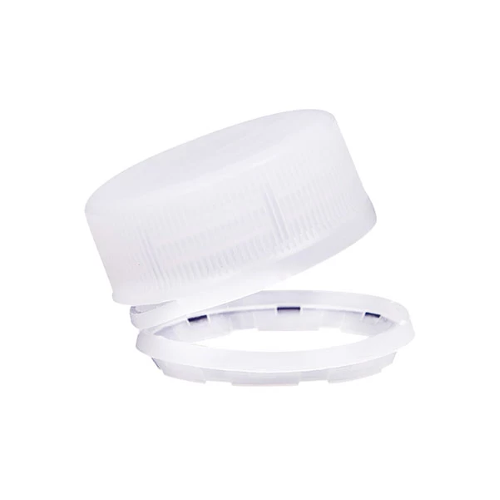
Tethered closures are plastic bottle caps that remain connected to the bottle after opening through an integrated hinge or retention system.
Unlike traditional bottle caps that can be completely separated from the container, tethered caps stay attached during consumption and disposal.
These closures are widely used for:
- Bottled water
- Carbonated soft drinks
- Juice beverages
- Dairy beverages
- Sports drinks
- Functional beverages
Today, many beverage production companies and plastic cap manufacturers are redesigning packaging systems to support tethered closure applications.
Why Are Tethered Closures Required in Europe?
The European Union introduced tethered closure requirements under the Single-Use Plastics Directive (EU Directive 2019/904).
The regulation officially applies to:
- Beverage containers up to 3 liters
- PET bottles
- HDPE beverage containers
- Single-use beverage packaging
The regulation became mandatory in July 2024.
The main objective is to prevent environmental littering caused by loose bottle caps and to keep caps connected to beverage containers before they enter collection and recycling systems.
According to the European Commission, caps and lids are among the most commonly found single-use plastic items collected on European beaches.
Why Are Beverage Brands Switching to Tethered Closures?
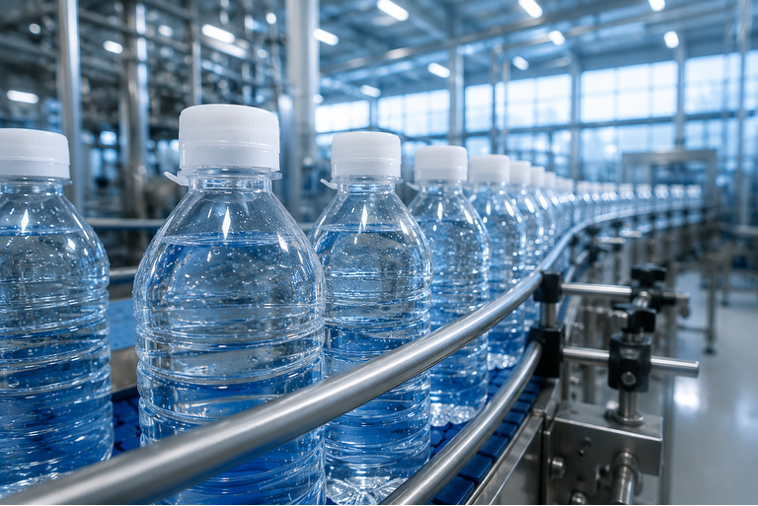
Packaging requirements in the beverage industry are changing quickly. In addition to product safety and production efficiency, beverage brands are facing growing pressure to improve recyclability and support more responsible packaging recovery.
In Europe, tethered closures have become an important solution for preventing loose plastic caps from becoming separated from bottles during consumption, disposal, and collection. For many beverage manufacturers, tethered closures are no longer viewed simply as a compliance requirement. They are also becoming part of broader packaging standardization and sustainable packaging strategies.
By keeping caps attached to bottles during disposal and collection, tethered closures can help improve recycling efficiency and support circular packaging initiatives.
Many beverage brands are adopting tethered closure systems to support:
- improved recyclability
- packaging sustainability goals
- long-term regulatory readiness
For export-oriented beverage manufacturers, packaging compatibility and bottling line stability are becoming increasingly important during tethered closure adoption.
In large-scale beverage production environments, factors such as torque consistency, PET bottle integration, and filling line performance can directly affect operational efficiency and packaging consistency.
As a result, many beverage companies are increasingly seeking packaging partners capable of supporting integrated beverage packaging systems rather than individual packaging components alone.
Tethered closures are also becoming part of broader beverage packaging development trends, particularly as beverage brands continue focusing on recyclable packaging, lightweight PET bottle systems, and sustainable packaging development.
For additional insights into plastic caps and beverage packaging trends, you may also read: Plastic Caps and Closures in Beverage Packaging 2026
Are Tethered Closures Becoming a Global Packaging Standard?
Although tethered closure regulations were first introduced in Europe, many multinational beverage brands are now adopting tethered cap designs more broadly across global markets.
One reason is packaging standardization. Managing different bottle cap designs for different regions can increase production complexity, packaging variation, and supply chain coordination challenges.
For beverage manufacturers operating internationally, standardized tethered closure systems can help simplify packaging management while supporting sustainability initiatives and future regulatory preparation.
In practice, many beverage companies are now evaluating tethered closures not only from a compliance perspective, but also from an operational and long-term packaging strategy standpoint.
For beverage packaging manufacturers, tethered closure adoption may also involve adjustments to PET bottle compatibility, bottling operations, and filling line performance.
As global packaging policies continue changing, tethered closures are gradually becoming part of the beverage industry's broader transition toward recyclable and sustainability-focused packaging systems.
Why Do Some Consumers Dislike Tethered Closures?
Consumer response has been one of the most discussed topics since tethered closures became more widely adopted in beverage packaging.
Because consumers have used traditional removable bottle caps for decades, switching to tethered caps can initially feel unfamiliar. Some users report that the cap may interfere with drinking or require slightly different opening habits.
Common concerns include:
- the cap touching the face while drinking
- limited cap movement after opening
- unfamiliar opening and closing motions
- changes in overall drinking convenience
At the same time, many beverage packaging manufacturers are continuing to refine tethered closure designs to improve ergonomic performance and consumer usability.
Modern tethered cap development now focuses on areas such as:
- improved hinge flexibility
- better cap positioning
- smoother opening movement
- one-handed usability
- lightweight closure design
For many beverage brands, balancing sustainability goals with consumer convenience has become an important part of tethered closure development.
How Are Tethered Closures Different From Traditional Bottle Caps?
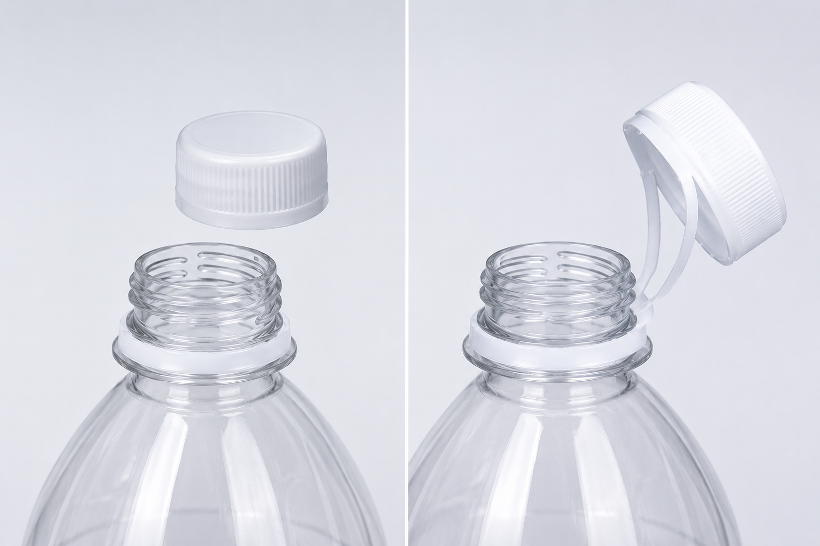
Traditional plastic bottle caps are designed to be completely removed from beverage containers after opening. In contrast, tethered closures are engineered to remain attached to the bottle through an integrated hinge or retention mechanism.
While both closure types serve the same primary function of sealing beverage containers, tethered closures are specifically designed to support improved recyclability, environmental compliance, and sustainable packaging goals.
As beverage packaging regulations continue evolving, tethered closures are becoming increasingly important for beverage brands targeting the European market and preparing for future sustainability requirements.
| Feature | Traditional Bottle Caps | Tethered Closures |
|---|---|---|
| Cap structure | Fully removable | Attached to bottle after opening |
| EU regulatory compliance | Limited for EU beverage packaging | Designed to support EU Directive 2019/904 requirements |
| Recycling efficiency | Caps may become separated during disposal | Bottle and cap are more likely to be recycled together |
| Sustainability positioning | Conventional packaging format | Supports circular packaging strategies |
| Consumer experience | Familiar opening behavior | Requires adaptation for some users |
| Engineering requirements | Standard closure design | Advanced hinge and retention engineering |
| Packaging system compatibility | Traditional bottling systems | Optimized for modern sustainable packaging systems |
| Environmental impact management | Caps may become separated from bottles after use | Helps keep caps attached for collection and recycling |
How Tethered Closures Are Designed for Modern Beverage Packaging
Designing tethered closures involves more than simply attaching the cap to the bottle.
In beverage packaging applications, closure systems must still maintain reliable sealing performance, smooth consumer usability, and compatibility with high-speed bottling operations.
For carbonated beverages in particular, tethered closures must support stable pressure retention and sealing consistency throughout production, transportation, and consumer use.
At the same time, beverage brands are also seeking lighter and more recyclable packaging solutions, creating additional design considerations for closure manufacturers.
As a result, modern tethered closure development often focuses on balancing:
- sealing reliability
- consumer convenience
- lightweight packaging
- recyclability
- production efficiency
For many beverage manufacturers, tethered closure adoption is not only a sustainability decision, but also a packaging system adjustment that affects bottling operations, production efficiency, and packaging consistency.
In high-speed beverage production environments, closure stability and hinge durability can directly affect filling line performance and packaging consistency.
According to Hon Chuan Group’s packaging engineering team, tethered closure development is no longer focused only on regulatory compliance. Factors such as hinge strength, opening performance, sealing reliability, and PET bottle compatibility have become increasingly important for modern beverage packaging systems.
For carbonated beverage applications and export packaging operations, maintaining stable sealing performance during transportation and high-speed filling processes remains a critical consideration.
Common Applications for Tethered Closures
Different beverage categories require different tethered closure designs depending on factors such as carbonation pressure, consumer convenience, sealing performance, and packaging requirements.
As beverage packaging systems continue evolving, closure manufacturers are developing tethered cap solutions optimized for specific beverage applications and production environments.
| Beverage Type | Common Tethered Closure Design Requirements |
|---|---|
| Bottled water | Lightweight tethered closures designed for high-volume production and easy consumer use |
| Carbonated soft drinks | Tethered closures engineered for pressure retention and sealing consistency in carbonated beverage packaging |
| Juice beverages | Wide-opening tethered caps designed to improve drinking convenience and pouring experience |
| Sports drinks | Ergonomic tethered closure designs that support active and one-handed consumption |
| Dairy beverages | Tamper-evident tethered closures designed to support product safety and sealing reliability |
| Functional beverages | Closures optimized for premium packaging appearance and consumer convenience |
| Large-format beverage bottles | Durable tethered cap systems designed for repeated opening and closing performance |
As sustainability regulations and consumer expectations continue evolving, beverage packaging manufacturers are increasingly developing application-specific tethered closure systems that balance recyclability, usability, and production efficiency.
Tethered Closure Solutions for Beverage Packaging
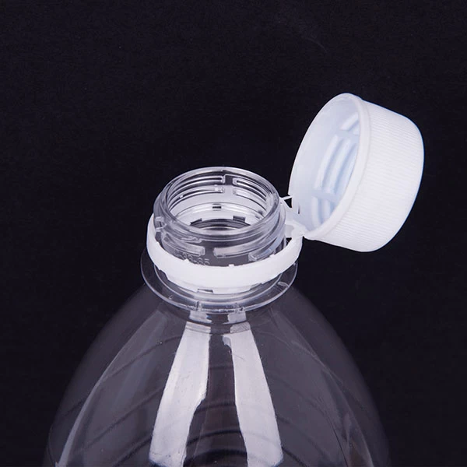
Beverage packaging systems require more than simply matching a bottle with a cap. Closure compatibility, sealing consistency, filling line performance, and packaging efficiency all play important roles in modern beverage production.
Hon Chuan Group provides tethered closure solutions designed for modern PET bottle and beverage packaging applications.
To support recyclable packaging development and evolving European packaging requirements, Hon Chuan continues developing lightweight tethered closure solutions designed to balance sealing reliability, production efficiency, and packaging sustainability.
Available tethered closure solutions include:
These tethered closure solutions are designed to support beverage packaging systems requiring:
- sealing consistency
- recyclability
- PET bottle compatibility
- high-speed bottling operations
- sustainable packaging development
For beverage brands transitioning toward recyclable packaging systems, closure compatibility and production efficiency are becoming increasingly important considerations.
Why Beverage Brands Are Seeking Integrated Packaging Solutions
Modern beverage packaging involves more than individual packaging components. Bottle caps, PET preforms, bottles, and filling systems must work together efficiently throughout production and distribution.
For many beverage manufacturers, packaging compatibility directly affects:
- bottling line stability
- production efficiency
- sealing performance
- packaging consistency
- supply chain coordination
This is one reason many beverage brands now prefer integrated packaging partners capable of supporting complete beverage packaging systems rather than sourcing individual components separately.
Integrated packaging solutions can help beverage companies improve:
- operational efficiency
- packaging consistency
- production coordination
- sustainability management
As recyclable packaging requirements continue expanding globally, integrated beverage packaging capabilities are becoming increasingly important for beverage manufacturers and beverage OEM/ODM operations.
Tethered closures are becoming increasingly connected to broader beverage packaging strategies, including lightweight packaging, recyclable PET bottle systems, and sustainable closure development.
You may also explore: Plastic Caps and Closures in Beverage Packaging 2026
FAQ About Tethered Closures
Q1 Why are bottle caps attached now?
Bottle caps are increasingly being attached to beverage containers to help keep caps and bottles together after opening and disposal.
In many recycling systems, loose caps can become separated from bottles during use, disposal, or collection. Tethered closures are designed to keep the cap attached to the container, helping reduce the risk of caps being lost, discarded separately, or left outside the recycling stream.
This packaging change has become more common in Europe as beverage brands adapt to new sustainability regulations and recyclable packaging requirements.
Q2 Do tethered closure regulations apply to all beverages in Europe?
Under the European Union’s Single-Use Plastics Directive (EU Directive 2019/904), tethered closures are required for most single-use beverage containers up to 3 liters sold in the European market beginning in July 2024.
The regulation applies to many common beverage categories, including:
- bottled water
- soft drinks
- juice beverages
- dairy drinks
- sports drinks
The requirement is part of the EU’s broader effort to improve packaging recyclability and prevent loose caps from becoming environmental litter.
Q3 Do tethered closures improve recycling efficiency?
Yes. Tethered closures are designed to improve the likelihood that both the bottle and cap will be collected and recycled together.
Traditional removable bottle caps can become separated during consumption or disposal, increasing the risk of litter and reducing packaging recovery rates. By keeping the cap attached to the bottle, tethered closures help support recycling systems and circular packaging initiatives.
Q4 What should beverage brands consider when selecting tethered closure solutions?
When selecting tethered closure solutions, beverage brands typically evaluate factors such as:
- regulatory compliance
- sealing performance
- recyclability
- consumer convenience
- compatibility with PET bottle systems
- high-speed bottling line compatibility
For many beverage manufacturers, packaging consistency and supply chain coordination are also important considerations, especially for large-scale beverage production and international distribution.
Hon Chuan Group provides tethered closure solutions designed for modern beverage packaging applications, including PET bottle systems and integrated beverage packaging support.
The Future of Tethered Closures in Beverage Packaging
Tethered closures are becoming a key part of modern beverage packaging development.
Driven by recycling targets, sustainability initiatives, and changing packaging regulations, beverage brands are re-evaluating how bottle caps, PET bottles, and packaging systems work together within broader circular packaging strategies.
For many beverage manufacturers, tethered closure adoption is no longer simply about regulatory compliance. Packaging efficiency, recyclability, filling line compatibility, and long-term supply chain management are now part of broader packaging planning considerations.
In recent years, many beverage brands have started evaluating tethered closures not only from a sustainability perspective, but also from a packaging system and operational efficiency standpoint.
For export-oriented beverage manufacturers, closure compatibility with existing bottling lines and PET bottle systems has become a critical factor when upgrading beverage packaging systems for European markets.
In beverage production environments, closure design can directly affect bottling performance, sealing consistency, and packaging stability across large-scale operations.
Companies capable of supporting integrated packaging solutions — including PET bottles, PET preforms, beverage OEM/ODM production, and tethered closure applications — are expected to play a growing role in future beverage supply chains.
Beverage brands evaluating tethered closure solutions for European export packaging applications can contact Hon Chuan Group for additional information about 28mm tethered closure, PET bottle compatibility, and beverage packaging support.


